
The theme of this year’s World Architecture Day, ‘Design for Strength’, calls on architects to embrace resilience and sustainability as guiding principles. In parallel, the United Nations World Habitat Day highlights the urgent need to address the global urban crisis. Together, they serve as a reminder that the built environment cannot exist without nature.
Here in Ireland, our most significant test of strength lies in tackling the intertwined emergencies of climate change and biodiversity loss. The latest report, Europe’s Environment – State of the Environment 2025, prepared by the European Environment Agency, offers a sobering reality check that challenges Ireland’s green image. The findings are eye-opening: 85% of Ireland’s protected habitats and nearly one-third of its protected species are in unfavourable condition, while over half of native plant species are in decline. The report also highlights Ireland’s wasteful consumption patterns and failure to transition to a circular economy. Meanwhile, the impacts of global warming are being felt acutely across Europe, where temperatures are rising at twice the global average.
So, what can be done to tame the climate chaos? How can we adopt approaches that enhance the built environment’s ability to withstand and adapt? How can architecture support equity, continuity, and resilience in the face of accelerating change?
As Dr Noeleen Smyth remarked last week at the Irish Green Building Council's Biodiversity & Built Environment Community of Practice meeting, one clear answer lies in turning toward nature itself. The urban environment can—and should be — supported by plants, but success depends on careful, informed choices. Each plant must be the right one for the right place, capable of thriving with minimal maintenance while performing multiple essential roles: cleaning the air, sequestering carbon, managing rainwater, sustaining biodiversity, and providing visual and psychological relief within our cities. And, as Dr Smyth reminded us, the simplest and most effective way to achieve this is by using native species. They are inherently adapted to local conditions, supporting a vast network of other organisms and reducing the ecological cost of maintenance.
Architects have a role to play here. We don’t need to be experts, but we do need to know when and whom to ask—and to work together. Luckily, guidance is easy to find now: the National Biodiversity Data Centre offers a set of straightforward lists of native and adapted non-native pollinator-friendly species in its ‘Top 10 Pollinator-Friendly Plants for Different Situations’.
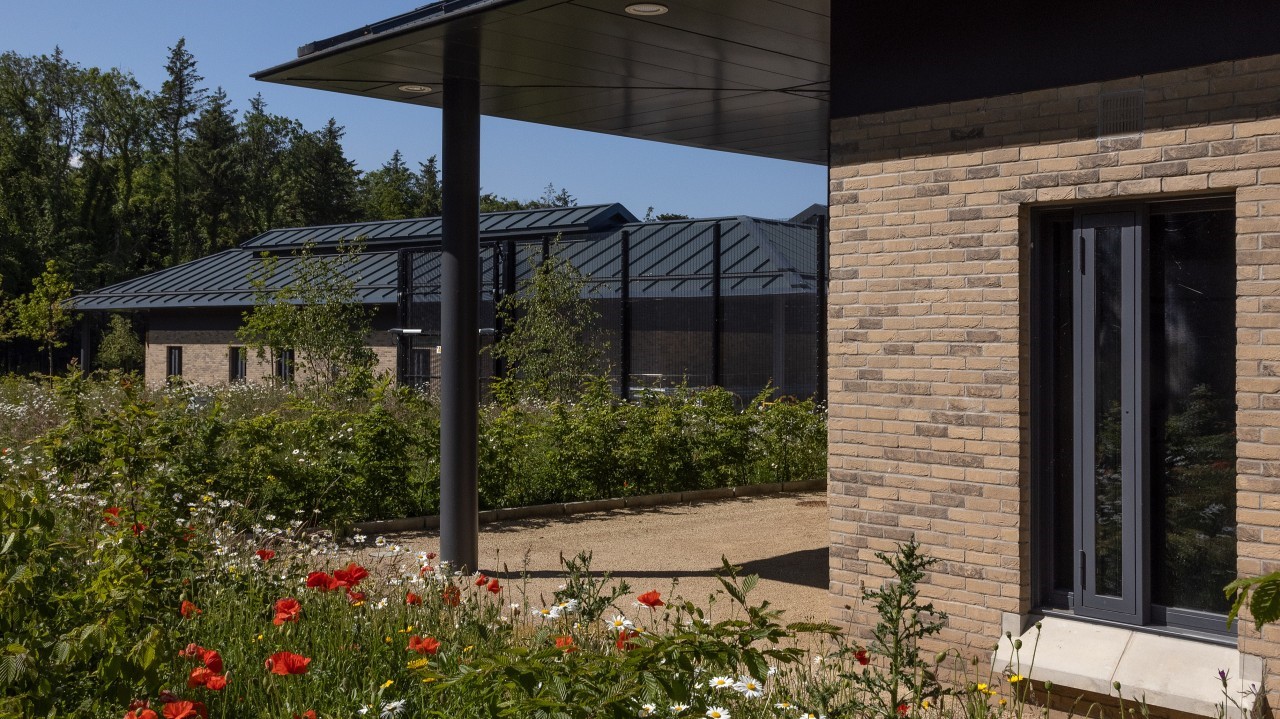
Excellent Irish examples of resilient design through Green Infrastructure can be found in the Irish Green Building Council’s new series of case studies on biodiversity and the built environment. The first set, now published, features projects such as the National Forensic Mental Health Service in Portrane, designed by Scott Tallon Walker Architects in association with Medical Architecture for the Health Service Executive. This project integrates nature-based solutions to support both human and ecological well-being—providing green views, sensory gardens, and educational features while enhancing biodiversity through native planting, wetland restoration, and sustainable water management. Over 15,000 native trees were planted, invasive species were carefully managed, and wildlife habitats were strengthened with nesting sites and meadow corridors. The replacement of conventional drainage with natural stormwater systems not only improved flood resilience but also achieved significant cost and environmental benefits.
The published case studies can be found at: https://www.igbc.ie/resources/biodiversity-and-the...
I'm looking forward to the release of more studies, which are due soon.
Another example of design for resilience and civic strength comes from the ‘Grow College Green’ project, by Scott Tallon Walker Architects, in partnership with OKRA landscape architects, for Dublin City Council and the National Transport Authority. It is a transformational urban design project aimed at revitalising Dublin’s historic core. The proposal reimagines the stretch from College Green to South Great George’s Street as a pedestrian-focused space, maximising green space and enhancing biodiversity to support both human well-being and the environment, integrating climate adaptation measures and improving accessibility.
The ‘Grow College Green’ Project can be viewed at https://www.dublincity.ie/grow-college-green
As we mark World Architecture Day, the UIA - International Union of Architects encourages us to share knowledge and best practices in resilient architecture. At STW Architects, we strive to contribute to this effort by sharing our experience and insights, embedding resilience, inclusivity, and environmental responsibility at the heart of our work. Projects such as the National Forensic Mental Health Service and ‘Grow College Green’ reflect our commitment to designing environments that support people, strengthen communities, and nurture life in all its forms.
Share


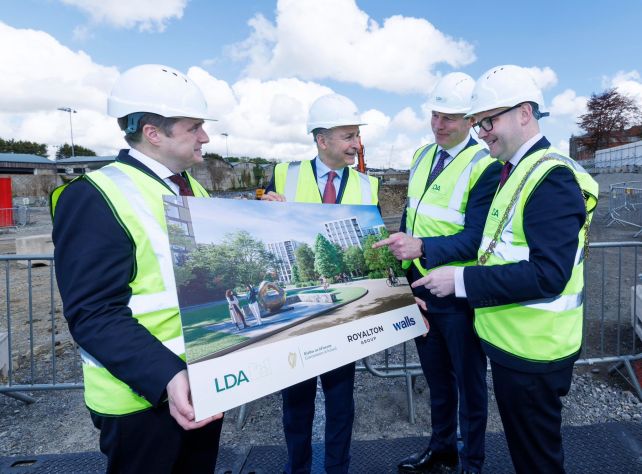
Construction has Begun at Richmond Village, Fairview 21.04.26
On Monday 20th April Ronan Phelan, Managing Director, and Paul Barry, Associate, attended the official sod turning to mark the beginning of construction of the residential development at 'Richmond Village' on the site of St. Vincent’s Hospital in Fairview.
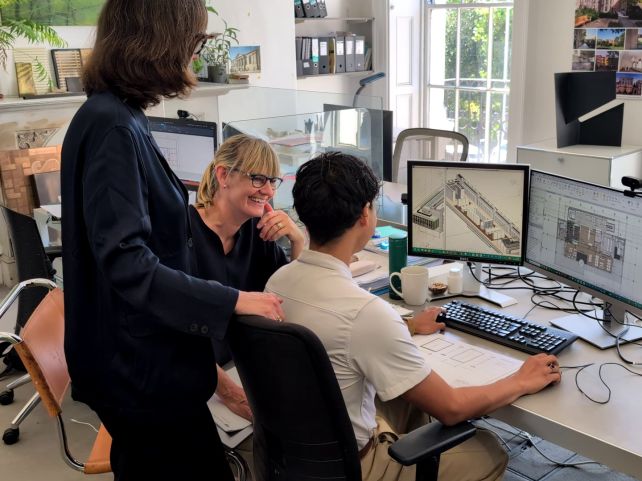
Spotlight on the STW Interiors Team 23.03.26
Our Interiors Team works across all departments in the practice, including commercial, residential, healthcare, education, hotel, event, industry, research, and tech.

We're Hiring! Opportunities to join STW Architects 20.03.26
We have a number of opportunities available for architects and architectural technologists across all levels and sectors in our Dublin and Cork city centre offices. If you’re interested in joining an internationally-recognised, award-winning architectural and interiors practice, please send your CV, cover letter, and portfolio to careers@stwarchitects.com


